 Fleet Depots
Property owners near fleet routes, highways and industrial corridors are getting approached about hosting EV charging. Before talking rent, it pays to check what the site can actually support and what a lease would commit you to. This is the checklist we would want a site owner to have before the first meeting.
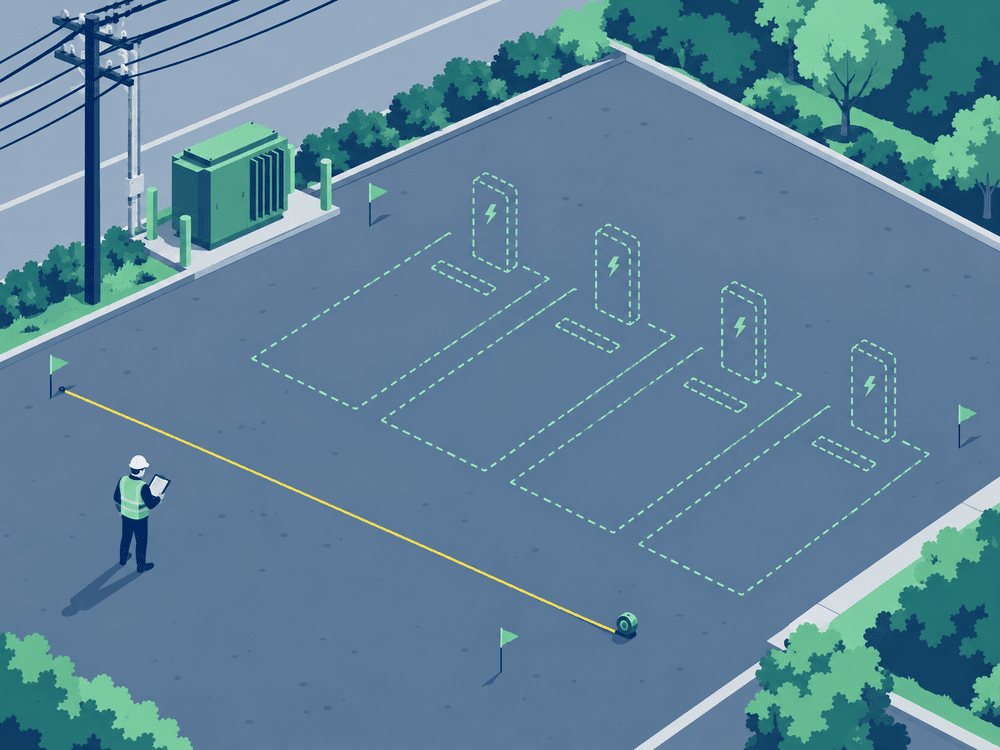
Start with power, not parking
The lot is the easy part. The constraint is electrical capacity: how much load the utility can deliver to your address, and how much new infrastructure stands between the grid and a working stall. Ask any prospective tenant what load they need, when they need it, and who pays for the utility work. Make-ready work - conduit, panels, transformers, sometimes a new service - can matter more to the deal than the rent number, so put it in writing early rather than discovering it in due diligence.
Lease structure: the questions that matter
- Term and renewals: tenants investing in grid upgrades usually want multi-year terms with options to extend. Know how long you are committing the site.
- Escalation: how rent grows over the term, and whether it tracks a fixed schedule or an index.
- Exclusivity: whether the tenant can block other charging or fleet uses on your remaining land.
- Maintenance: who owns, services and insures the equipment, and who handles customer-facing problems.
- End of term: who removes equipment, and to what condition the site must be restored.
- Access: which hours, which vehicles, and whether the rest of your property is affected.
What the tenant should handle
A serious charging tenant takes responsibility for their equipment, uptime, drivers or fleet customers, permits for their work, and the utility relationship for their load. If a proposal pushes equipment maintenance or customer issues back onto the landowner, that is a negotiation point, not a norm you have to accept.
Site suitability beyond the fence
- Vehicle access: can the target vehicles (vans, trucks, or autonomous fleets) enter, turn and queue without blocking public roads?
- Operating hours: 24/7 fleet charging means lighting, security and neighbor impact worth pricing into the deal.
- Location value: proximity to fleet routes, depots, airports or industrial users matters more than street traffic counts.
- Zoning and permitting: confirm the use is permitted before signing, not after.
A note on funding programs
Some states fund fleet charging, which can change a tenant's math and a site's attractiveness. Colorado's Fleet-ZERO program funds private depot and shared fleet charging across light-, medium- and heavy-duty fleets and lists fleet charging providers among eligible applicants; its fall 2026 application round runs November 16, 2026 through January 15, 2027, with rolling review year-round for smaller requests. Texas's TxVEMP all-electric program is open first-come, first-served through August 2029 but targets Class 4-8 trucks and similar heavy-duty equipment, so it is relevant mainly if your tenant runs heavy-duty fleets.
Colorado Energy Office: Fleet-ZERO program
Texas TCEQ: TxVEMP all-electric grants
Common questions
How long are EV charging site leases?
Expect tenants to ask for multi-year terms with renewal options, because they need time to recover grid-upgrade and equipment costs. The right length depends on what they are building; treat anything long as compensation-worthy commitment, not free flexibility.
Should rent reflect the tenant's charging revenue?
Structures vary: flat rent, revenue share, or a blend. What matters is comparing total value across the whole term, including who pays for upgrades and who takes the utilization risk if the site underperforms.
Bring the checklist to the first meeting
Fleet Depots is developing depot space for robotaxi and electric fleets, so we look at sites from both sides of the table: the site owner's and the operator's. Our site owners page describes what we look for and how a conversation with us starts.
Sources checked November 9, 2026. General information, not legal, tax or engineering advice; program details belong to the linked program pages.